
These are ordinary games for all children, not a special category of autism games. They are useful here because a simple game can make room for a turn, a pause, and a request — especially when those moments do not appear easily yet.
Searching for games for autistic children returns very long lists, and the trouble with lists is that a game does not work by being the right game: it works by how it is arranged around.
A puzzle on the rug can be an excellent hour of teaching or twenty minutes of a child alone with a puzzle. The difference is not the puzzle.
What turns a game into teaching
Three things, and even one of them changes a lot.
A turn. Something happens, then something else happens, and the two belong to different people. Without a turn the two of you are playing near each other rather than together — which is not nothing, and is often exactly the step that comes before a turn.
A pause. A gap where the child has room to do something: look, point, say, push the toy toward you. If the adult fills every gap, none are left.
A reason to keep going. The game itself. If the child has to be talked into continuing, it was not the game.
Start from the play they already have
The usual advice is to teach “appropriate play”, and it usually turns into removing what the child was doing and putting something else there. It rarely goes well, and it is easy to see why: you have just taken away the one thing that was working.
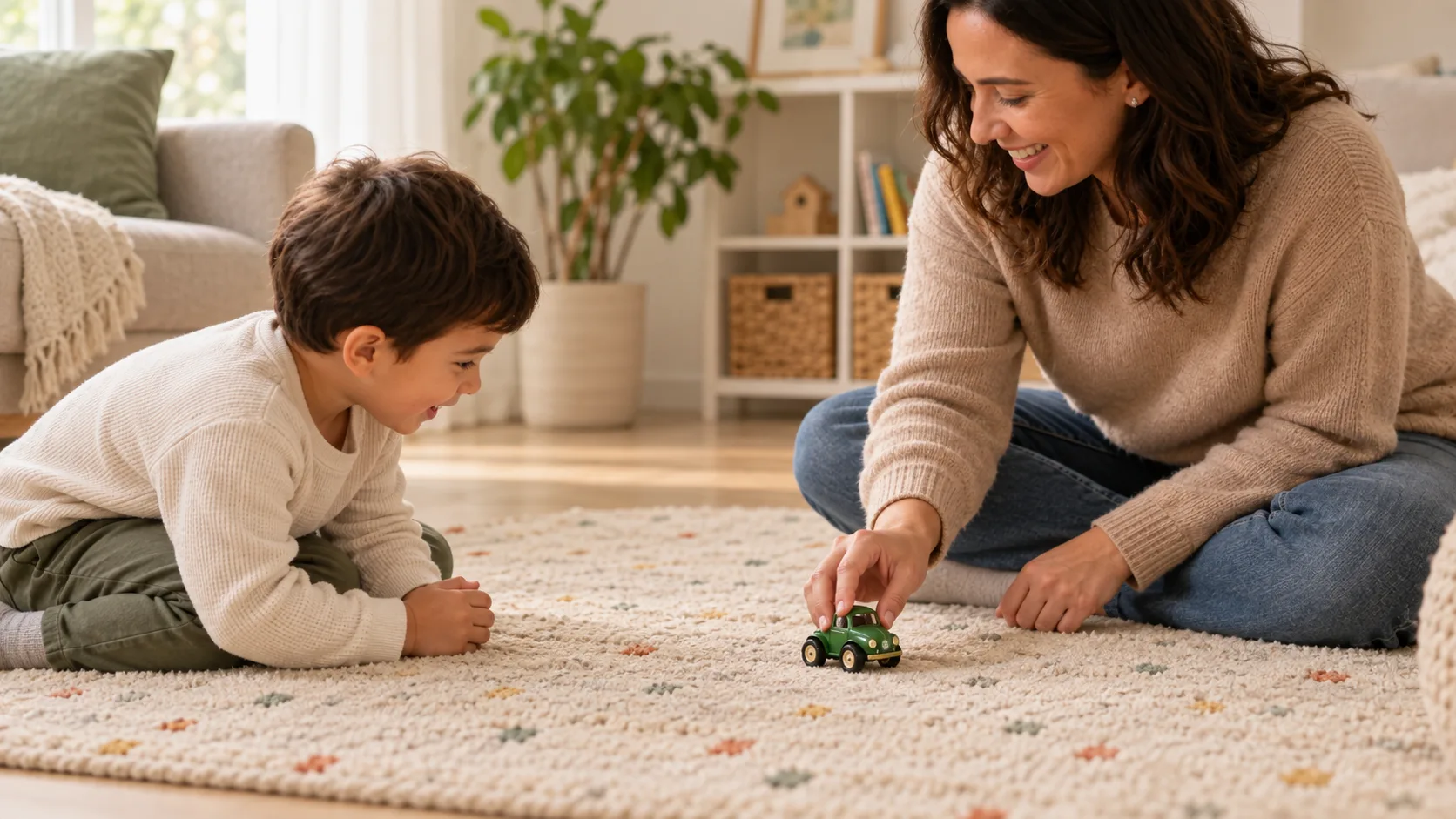
The alternative is to join. If they line up cars, take a car and put it at the end of the line. If they spin a lid, spin another beside it. No instructions, no questions, no redirecting. At first this is just being near without interfering, and that is the part to earn before any other.
Once the child lets you in, the turn appears almost by itself: you place a car, they place a car. That is the game, and it came out of theirs.
The games that work first
The best starting games share one property: the adult is the piece that makes the good part happen.
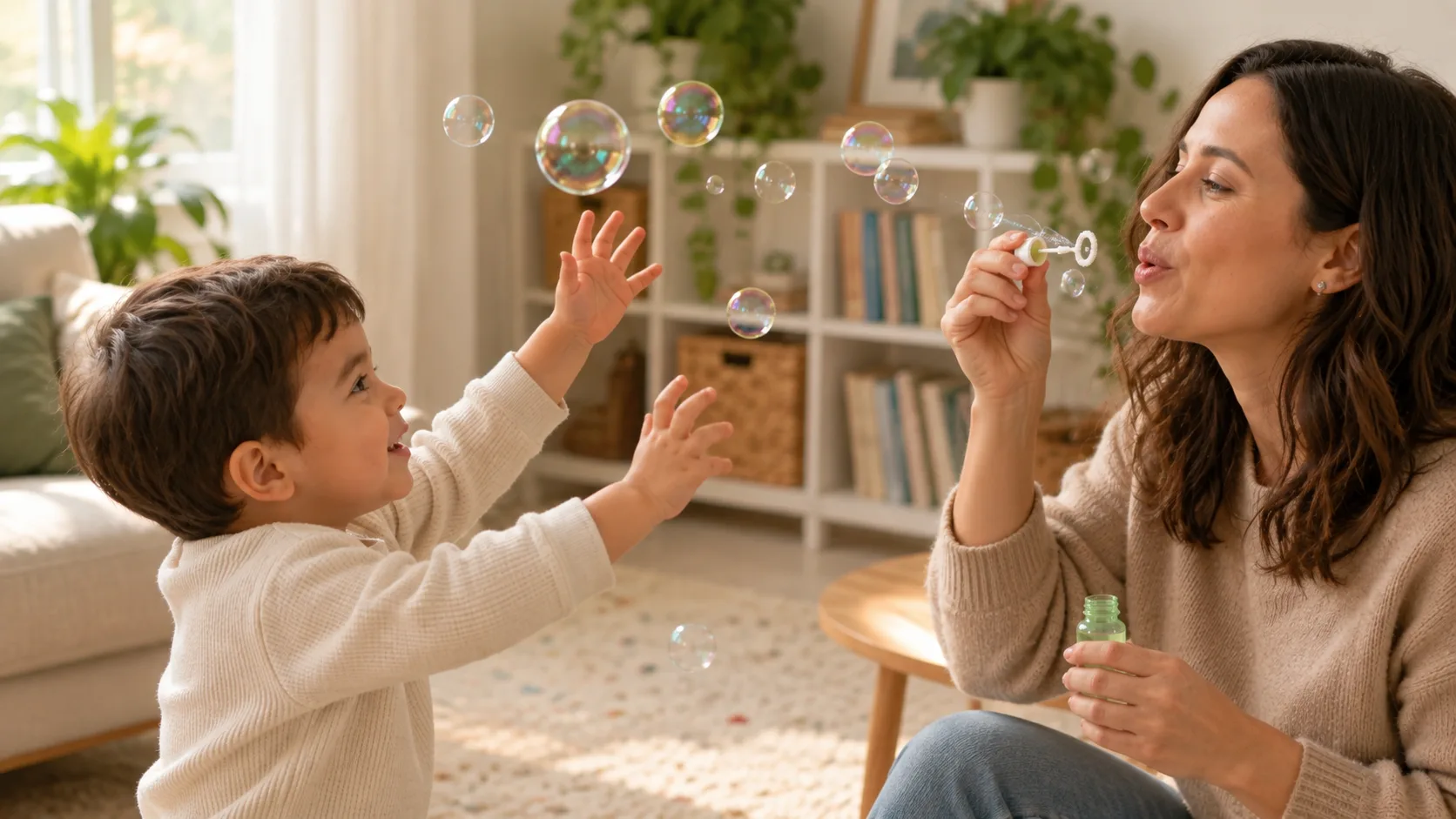
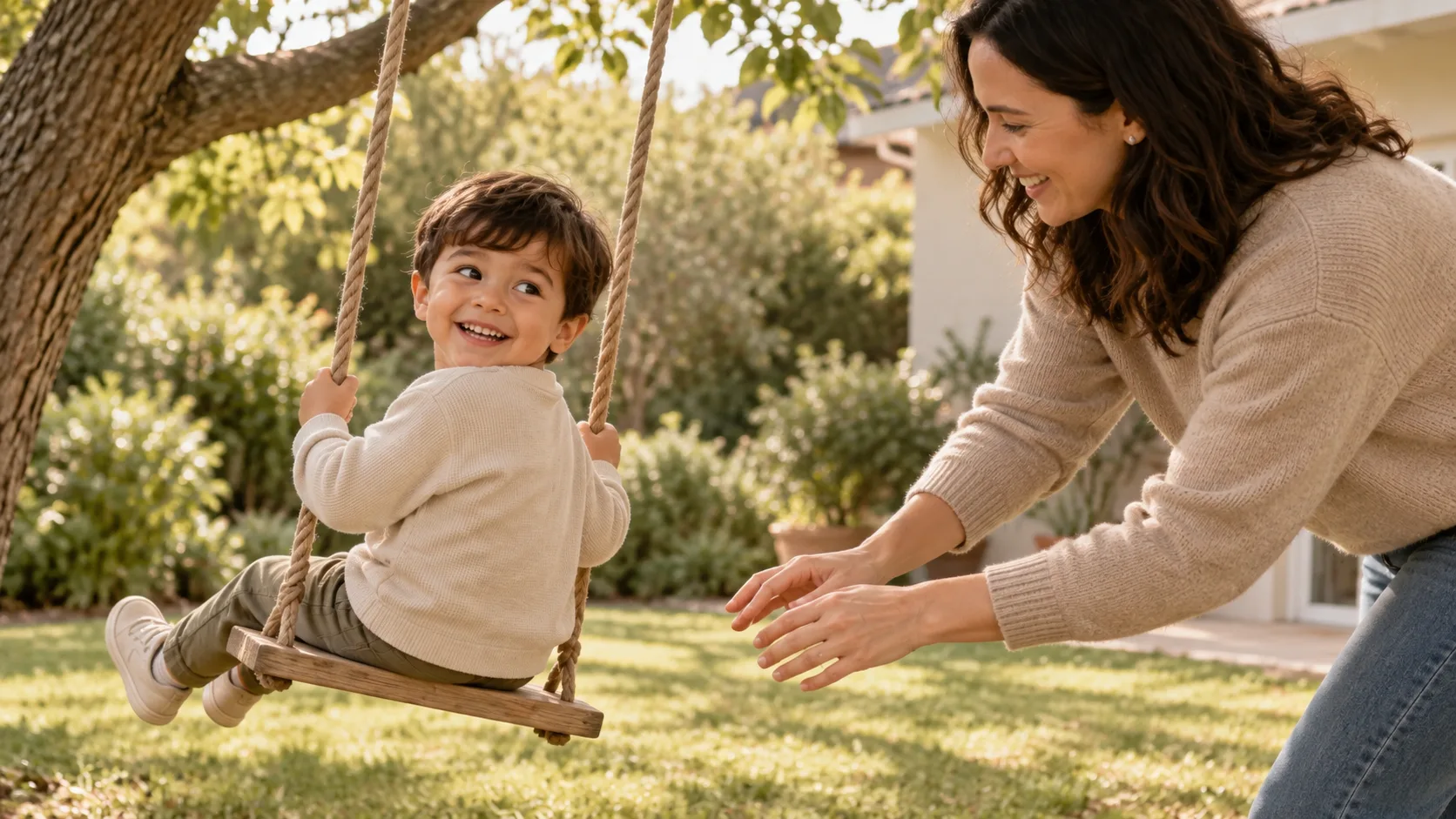
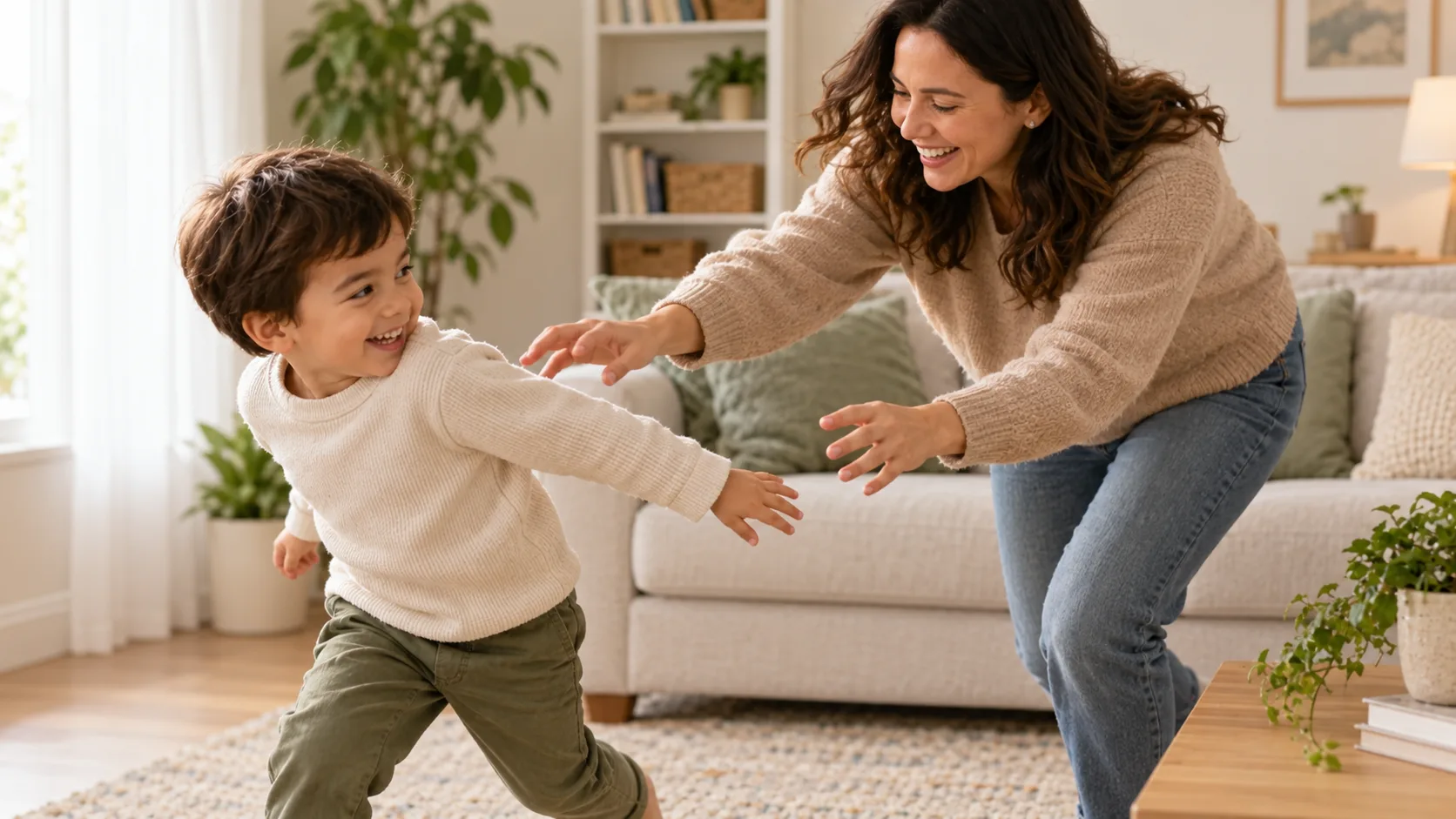
Bubbles. The swing. A wind-up toy. Chase and tickles. A tower to knock down. In all of them the child does not have to learn rules — they only have to do something to make it continue, and that something can start as a glance.
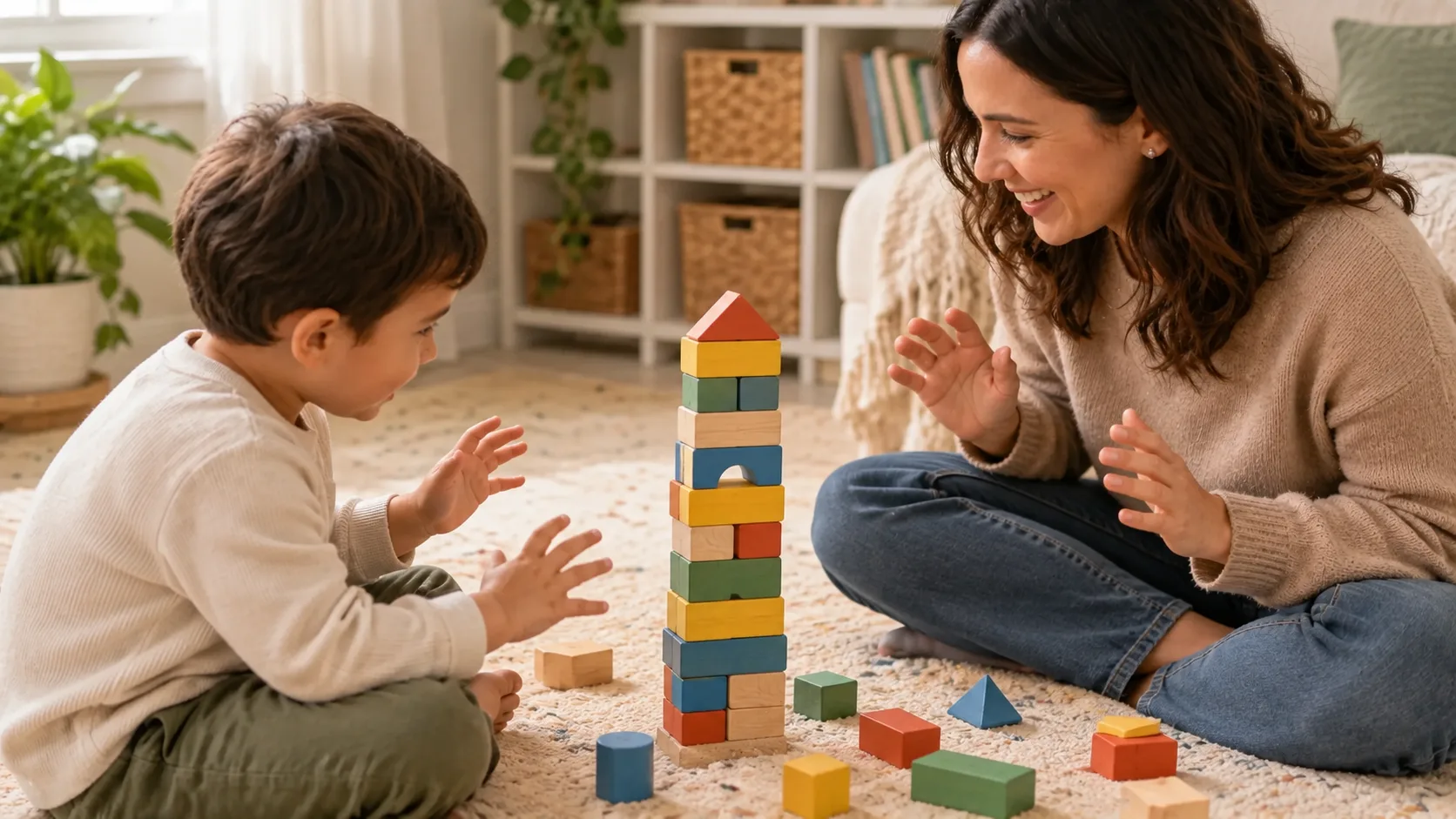
Rule games, board games and pretend play often come later and usually build on a turn that already exists — though children reach symbolic play by different routes, and this is one path rather than a sequence every child has to follow in this order.
What a game does not do
A game does not replace direct practice. Skills that need many clean, close-together repetitions — telling two similar pictures apart, building a working vocabulary — are hard to get from play alone, because a rug naturally offers fewer chances to practice one specific thing in a row than a focused table session does.
And the reverse: what is practiced at the table does not survive on its own if it never shows up anywhere enjoyable. That is why both belong in the same plan, and why neither is the reward for the other.
Further reading
- Our readiness check — three questions, one minute, no signup.
- ABA therapy activities — the other half, the ten structured minutes.