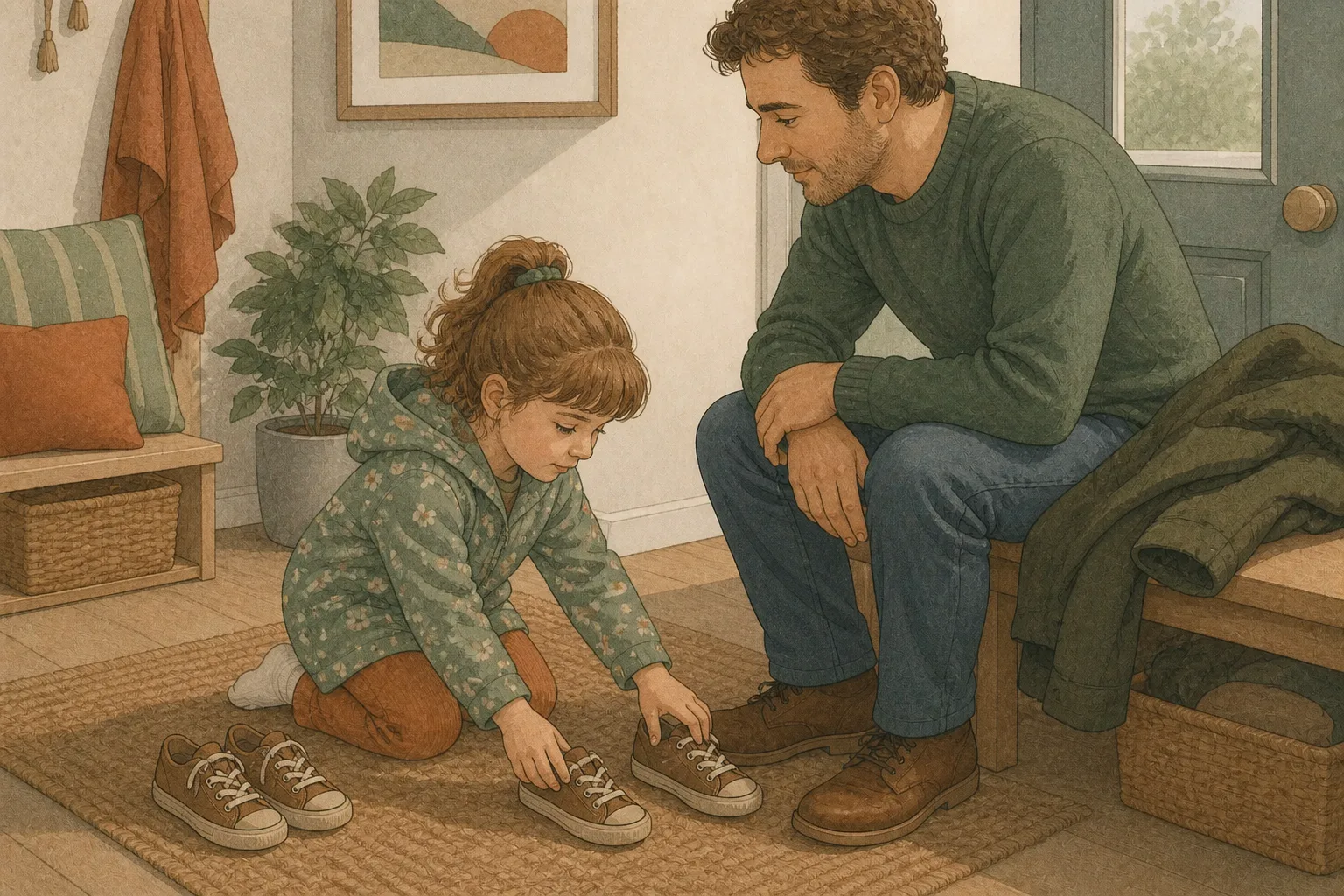
Search “ABA therapy at home”, applied behavior analysis practiced outside the clinic, and you will find two kinds of advice: the kind that quietly suggests you can run the whole intervention yourself, and the kind that treats parents as spectators until the next appointment. Both are wrong, and both waste the most valuable resource a young child has — the hours they spend with you.
ABA is not a therapy, even though nearly everyone calls it one. ABA is an applied science, applied behavior analysis, and it is the source of the teaching procedures a program uses. What you do at home is teaching, not the discipline itself — but coordinated with a professional program, that teaching is genuinely part of the intervention your child is receiving, not something separate from it.
Here is the realistic version.
Applied behavior analysis at home: what home practice is for
A child might have a handful of professional session hours a week, and about a hundred waking hours at home. Nothing that happens in session can compete with that arithmetic, and nothing at home needs to replicate a session to matter. The goal of home practice is narrower and more achievable: give the skills being taught more chances to happen, in the place where they ultimately need to work.
That means practicing the goal the program is working on, the way your Instructor set it up — which is not always the identical material. A planned variation your Instructor has agreed to (a different cup, a different photo of the same word) can be exactly right; inventing new targets because a video suggested them is the thing to avoid. When home practice drifts from the program, the child gets two half-programs instead of one whole one; in the worst case they contradict each other on something as basic as which word to use for a request.
What a home session realistically looks like
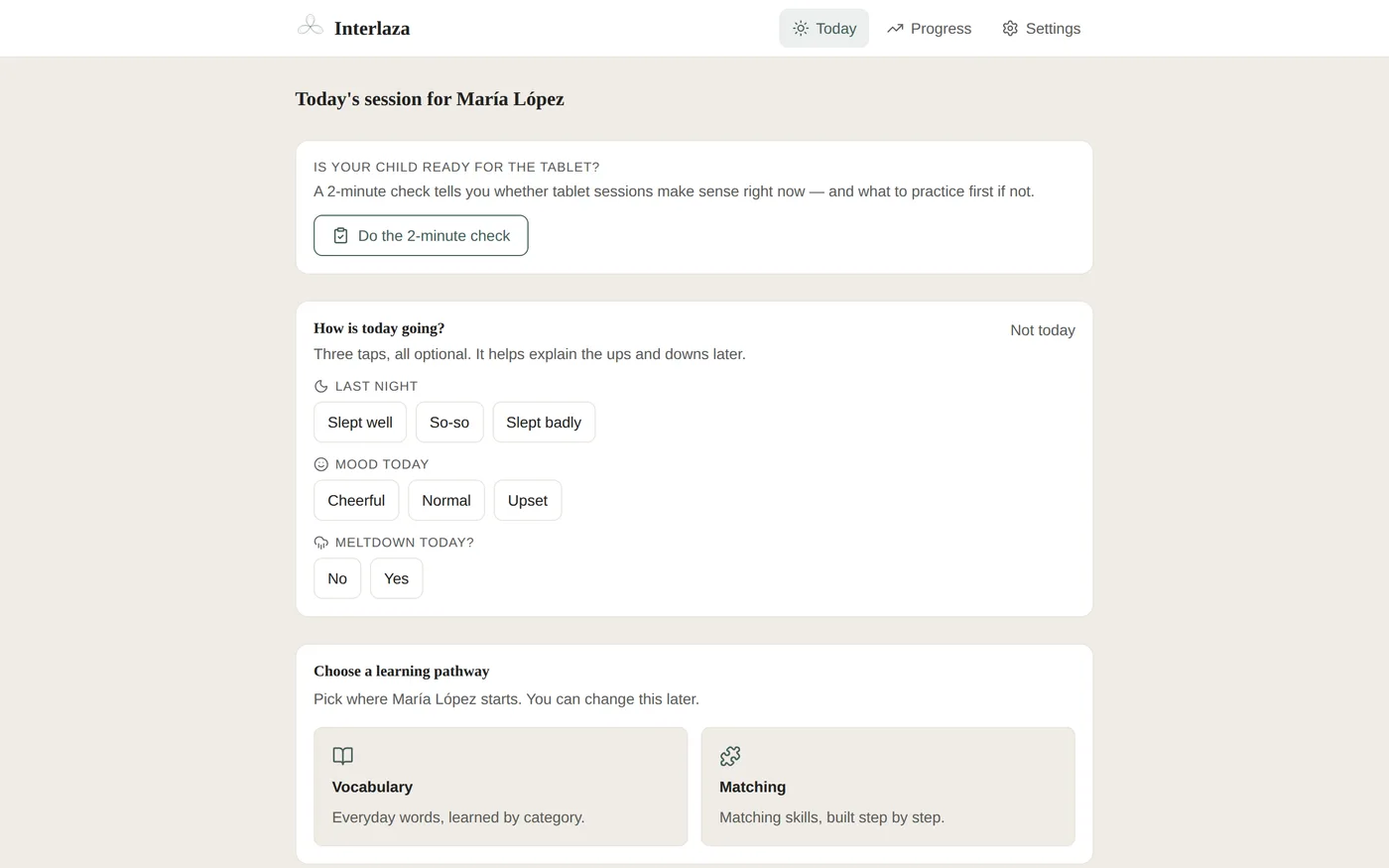
Ten minutes, once a day, at a table with few distractions, ending while it is still going well — a useful starting point, not a formula. Those are things to aim for, never a reason to push on through real distress just to reach a win; a session that ends early because your child is upset is not a failed session. Short enough that neither of you dreads it; regular enough that it compounds. If you use Interlaza, the app runs the trial structure — showing the material, adjusting the help, keeping the record — so your attention goes where the app cannot: on your child, on celebrating warmly, on ending on a win when that is where the session naturally lands. We have a step-by-step walk-through of one of these sessions linked below.
The teaching hiding in ordinary moments
The second half of home practice is not a session at all. Meals, bath time, dressing and the walk to the park are full of natural requests, choices and labels — the exact skills the structured practice targets, occurring where they matter. Ask which shirt, wait for the reach or the word, name what is in front of you. The professional literature calls this incidental or naturalistic teaching; a family just calls it the day. The skill is noticing the opportunity and not rushing past it.
What stays with the professionals
Deciding when a skill is mastered and what comes next; anything involving challenging behavior, where a wrong guess about why the behavior happens can make it worse. Goals themselves are not the professional’s alone to set — they are agreed together, with your priorities as a family part of that conversation. If your child has an Instructor or a BCBA-supervised program, home practice should feed their data and follow the criteria you agreed on together — the article on teaming up with your Instructor, linked below, covers exactly how that collaboration works. If your child has no professional program yet, structured matching practice is still a safe and genuinely useful place to begin, and worth beginning realistically, with a readiness check rather than a subscription.
Further reading
- Our readiness check — three questions, one minute, no signup — for whether tablet-based practice suits your child right now.
- The introduction to matching activities for children with autism, the usual starting point for structured practice at home.